

In the rapidly evolving landscape of AI, interoperability among agents is becoming a cornerstone for enterprise innovation. Google's recent announcement of the Agent2Agent (A2A) protocol marks a significant stride toward seamless collaboration among AI agents across diverse platforms. As CTOs chart the course for their organizations’ AI strategies, understanding A2A's capabilities—and how it contrasts with Anthropic's Model Context Protocol (MCP)—is essential.
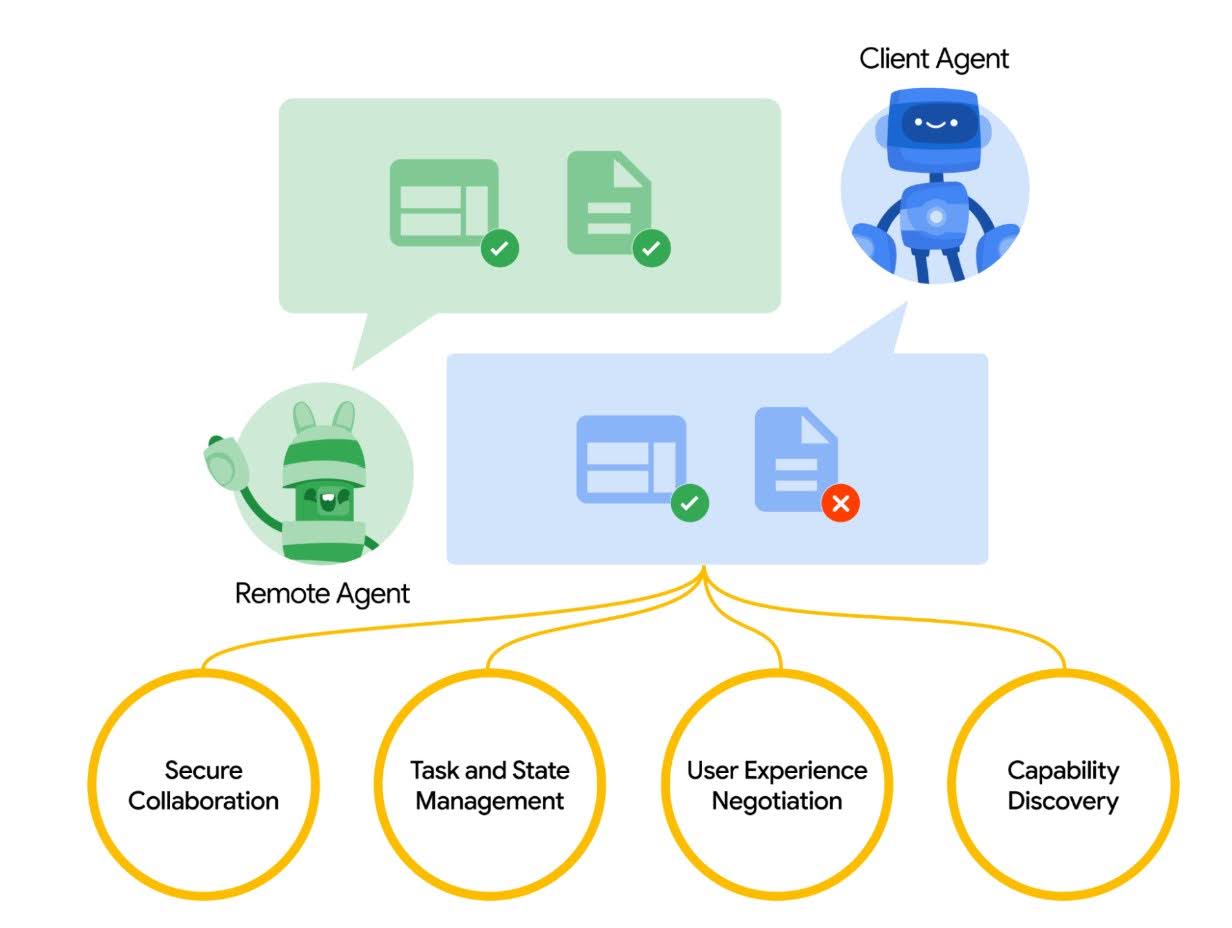
A2A is an open protocol designed to enable AI agents to communicate, coordinate, and collaborate—regardless of their underlying frameworks or vendors. This initiative, backed by over 50 technology partners including Atlassian, Box, and Salesforce, aims to dismantle the silos that often hinder enterprise automation.
This protocol is poised to revolutionize how AI agents interact within enterprise ecosystems, promoting a more cohesive and efficient operational environment.
While A2A focuses on agent-to-agent interoperability, Anthropic's Model Context Protocol (MCP) addresses the integration of AI agents with external tools, systems, and data sources. MCP provides a standardized, model-agnostic interface for AI assistants to access resources, execute functions, and handle contextual prompts.
MCP serves as a foundational layer for AI agents to interact with the broader digital environment, complementing A2A’s focus on inter-agent communication.
Feature / Protocol
A2A (Agent2Agent)
MCP (Model Context Protocol)
Primary Purpose
Enables collaboration and communication between agents
Connects agents with external tools, APIs, and data
Architecture
Decentralized, peer-style messaging
Centralized, server-mediated communication
Discovery Mechanism
Agent Cards (JSON descriptors for capabilities)
Tool & resource registry with type-safe schemas
Protocol Stack
HTTP, JSON-RPC, SSE
stdio, HTTP, Server-Sent Events
Security Model
Built-in authentication and authorization, OAuth
Host-managed, sandboxed tool execution
Focus
Task lifecycle management, real-time collaboration
Resource invocation, prompt augmentation
Use Cases
Scheduling, workflow chaining, multi-agent systems
Contextual tool use, API calls, data retrieval
Modality Support
Text, audio, video
Primarily text-based (model input/output)
Interoperability
Cross-vendor agent coordination
Model-agnostic integration with enterprise resources
Vendor Backing
Google, Salesforce, Box, and others
Anthropic, with open specification
For CTOs, the advent of A2A and MCP represents an opportunity to architect AI systems that are both collaborative and integrative. By leveraging A2A, organizations can enable their AI agents to work in concert, enhancing productivity and innovation. Concurrently, MCP facilitates the seamless integration of these agents with the necessary tools and data sources, ensuring that AI initiatives are grounded in the organization’s operational reality.
The integration of A2A and MCP into enterprise AI strategies offers a pathway to more dynamic, responsive, and intelligent systems.
The integration of A2A and MCP offers a new architecture for dynamic, responsive, and interoperable AI systems. As you evolve your enterprise AI strategy, consider piloting these protocols in isolated use cases—such as multi-agent scheduling or secure tool invocation—to evaluate fit. If you're already experimenting with agent frameworks or planning AI-driven system modernization, we’d be happy to share what’s worked across teams we've advised.
Talk your AI strategy with our CTO: Schedule time with Lucas Hendrich
Let's talk about where you are today and where you want to go - our experts are ready to help you move forward.