
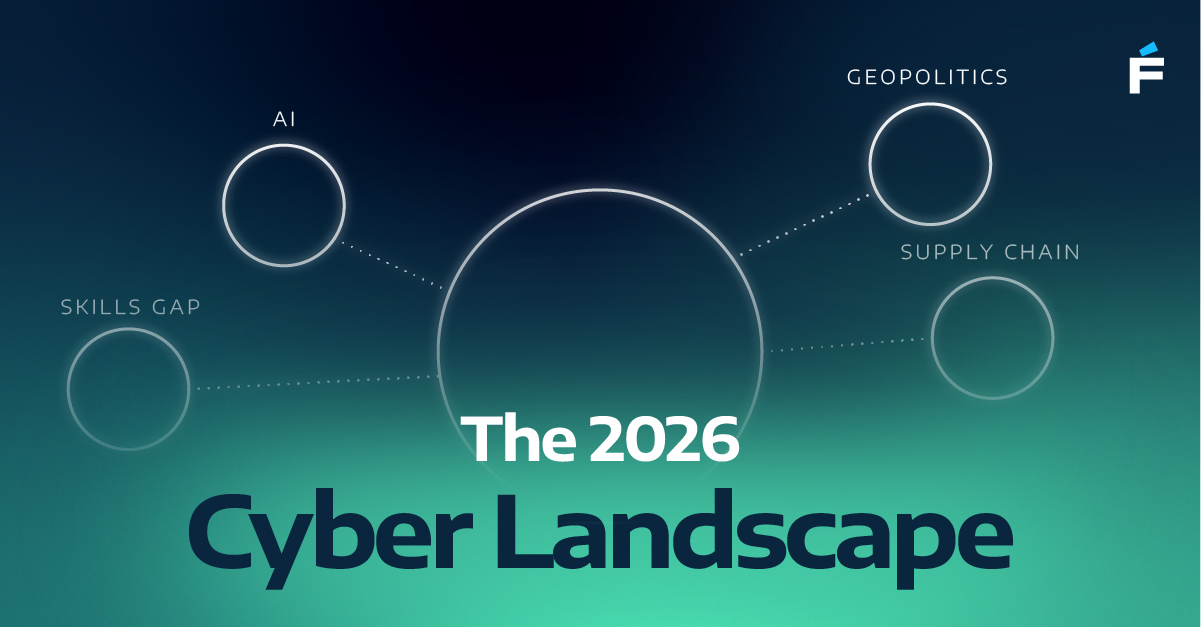

The World Economic Forum's Global Cybersecurity Outlook 2026 confirms a shift we have observed for some time: cybersecurity has evolved beyond a technical back-office function into a core strategic concern driven by artificial intelligence and geopolitical volatility. For technology leaders, this landscape demands a transition from reactive defense to proactive ecosystem resilience. The future of security depends not merely on the tools we deploy, but on the choices we make today regarding investment, foresight, and collaboration.
Artificial intelligence now stands as the primary driver of change in cybersecurity, with 94% of executives identifying it as the most significant factor in the year ahead. This creates a dual dynamic where defenders leverage AI for automation and detection, while adversaries utilize it to scale attacks and enhance social engineering.
Significantly, the primary concern for CEOs has shifted from purely offensive capabilities to data leaks associated with generative AI. While 87% of organizations identify AI-related vulnerabilities as the fastest-growing risk, widespread adoption often outpaces security readiness. We must prioritize governance frameworks that validate these tools before deployment, a process that has improved but is still only present in 64% of organizations.
Geopolitical volatility has become a defining feature of cyber risk, influencing mitigation strategies for the majority of organizations. This fragmentation exposes critical vulnerabilities within the supply chain, particularly through "inheritance risk" where organizations cannot assure the integrity of third-party software or hardware.
While large enterprises are adapting by increasing threat intelligence and engagement with government agencies, the interconnected nature of digital ecosystems means a single provider disruption can cascade globally. We see that 66% of organizations have altered their cybersecurity strategy specifically due to geopolitical tensions, moving toward digital sovereignty and reduced dependence on foreign technology providers.
A widening capability gap threatens the global ecosystem. We see a stark divergence between highly resilient organizations and those falling behind, driven largely by a shortage of cybersecurity skills. Eighty-five percent of insufficiently resilient organizations report missing critical skills, compared to only 22% of their highly resilient peers.
This inequity creates systemic risk. Less secure partners become entry points for attacks on well-resourced enterprises, as adversaries target the weakest links within the supply chain. True resilience requires that we look beyond our own perimeters and assess the maturity of our entire ecosystem.
Despite the clear strategic imperative for advanced resilience, organizations face significant practical hurdles that technology alone cannot solve.
The path forward requires viewing cybersecurity as a strategic economic imperative rather than a cost center. We must prioritize ecosystem engagement, ensuring that security extends to our suppliers and partners through shared intelligence and collaborative recovery exercises.
Key actions for technology leaders include:
Navigating this complex landscape requires more than just acquiring new tools; it demands a fundamental modernization of underlying architecture and a commitment to engineering excellence.
At Forte Group, we help organizations dismantle the constraints of legacy systems and build the secure, scalable data foundations necessary for advanced AI adoption. We work with engineering leaders to ensure that governance is a core design principle rather than an afterthought. By decoupling outdated infrastructure and implementing robust security frameworks, we enable you to accelerate innovation safely. If you are ready to modernize your technology stack and turn cybersecurity from a risk factor into a business enabler, we are here to help you execute that vision.
Let's talk about where you are today and where you want to go - our experts are ready to help you move forward.