


Security gaps don't usually walk in the front door with a siren. They’re quiet. They look like a "quick" auth check, a dependency update nobody quite finished reviewing, or a temporary fix that’s now three years old. At the In the moment, it doesn't look like a risk; it just looks like delivery.
This is the eternal struggle: How do we bake security into the DNA of engineering without turning every sprint into a soul-crushing compliance checklist?
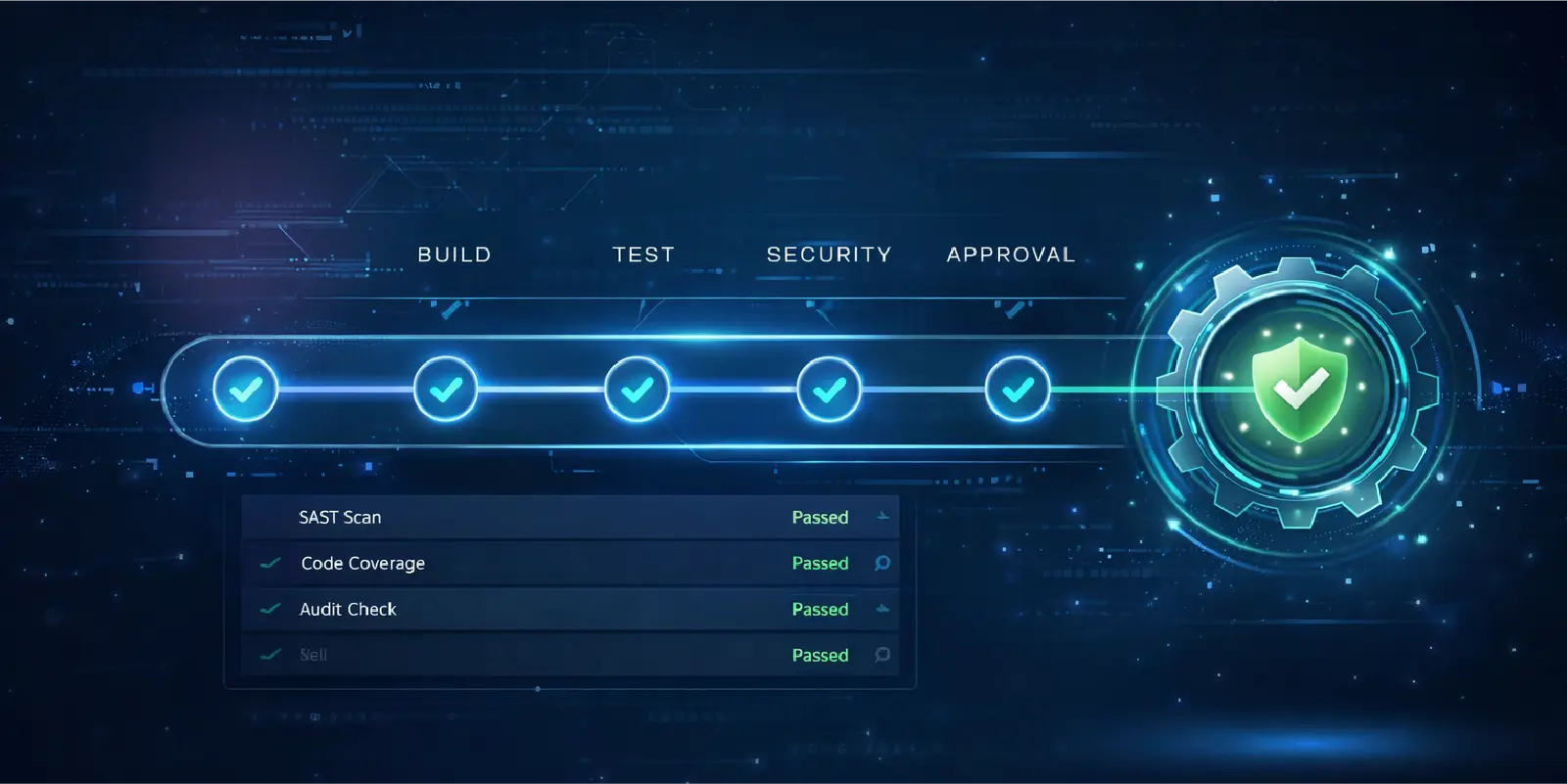
The best fix is straightforward: Stop asking for security and start enforcing it through automated, non-negotiable policies directly inside the software development workflow.
Security and quality are connected at the root. Code that’s hard to maintain is code that’s hard to secure. Systems that are brittle under change accumulate risk faster—because teams stop refactoring and start working around problems.
Quality gates are effective because they operate where decisions happen:
When the gate is explicit, teams stop relying on tribal knowledge and inconsistent reviewer standards. They get a shared definition of “ready to merge,” enforced the same way every time.
That consistency matters more than any single rule. A control that runs automatically on every change is stronger than a control that depends on calendar time, available reviewers, or institutional memory.
At Forte Group, we invest in secure software design and engineering training. We do peer reviews. Both are necessary.
Neither is sufficient.
Manual reviews vary by reviewer, deadline pressure, and codebase familiarity. Training improves intent, but it doesn’t guarantee execution - especially across distributed teams, multiple projects, and rapidly changing requirements. And it does nothing for code that sits untouched until someone discovers it the hard way.
Modern attackers also have leverage. They can use automation - and increasingly AI-assisted workflows - to find exploitable patterns faster than many teams can refactor them out. The response isn’t panic. It’s discipline: scan early, scan continuously, and enforce standards in the software development workflow.
The organizations that get this right treat it as an operating model, not a tool rollout. Here are the practices that consistently work - internally at Forte Group and across client delivery environments.
The fastest way to fail a program is to declare war on legacy debt on day one. Teams lose momentum. Dashboards become noise. People stop looking.
A better approach:
This changes behavior quickly and produces measurable improvement without creating an unrealistic cleanup project.
Controls that live in documents or steering committees become optional under pressure. Controls that live in pull requests become routine.
The goal is straightforward:
Every organization needs a way to handle edge cases: false positives, necessary exceptions, and tuning standards to match real systems.
The difference between “adoption” and “operational control” comes down to whether exceptions have:
Without that, standards decay silently and the gate becomes a theater.
From a security perspective, success isn’t “zero findings.” Success is a system that makes risk harder to introduce and easier to remove.
In mature programs, you see:
That’s the real outcome: engineering quality becomes a control, not a suggestion.
Security programs win when they align with engineering reality. If a security control demands heroics, it fails the moment deadlines tighten. If a control runs automatically inside the workflow, it becomes part of how an engineering organization delivers.
That’s the lens we use at Forte Group: secure delivery as an operating discipline—measurable, enforceable, and built into the way teams work.
Let's talk about where you are today and where you want to go - our experts are ready to help you move forward.