

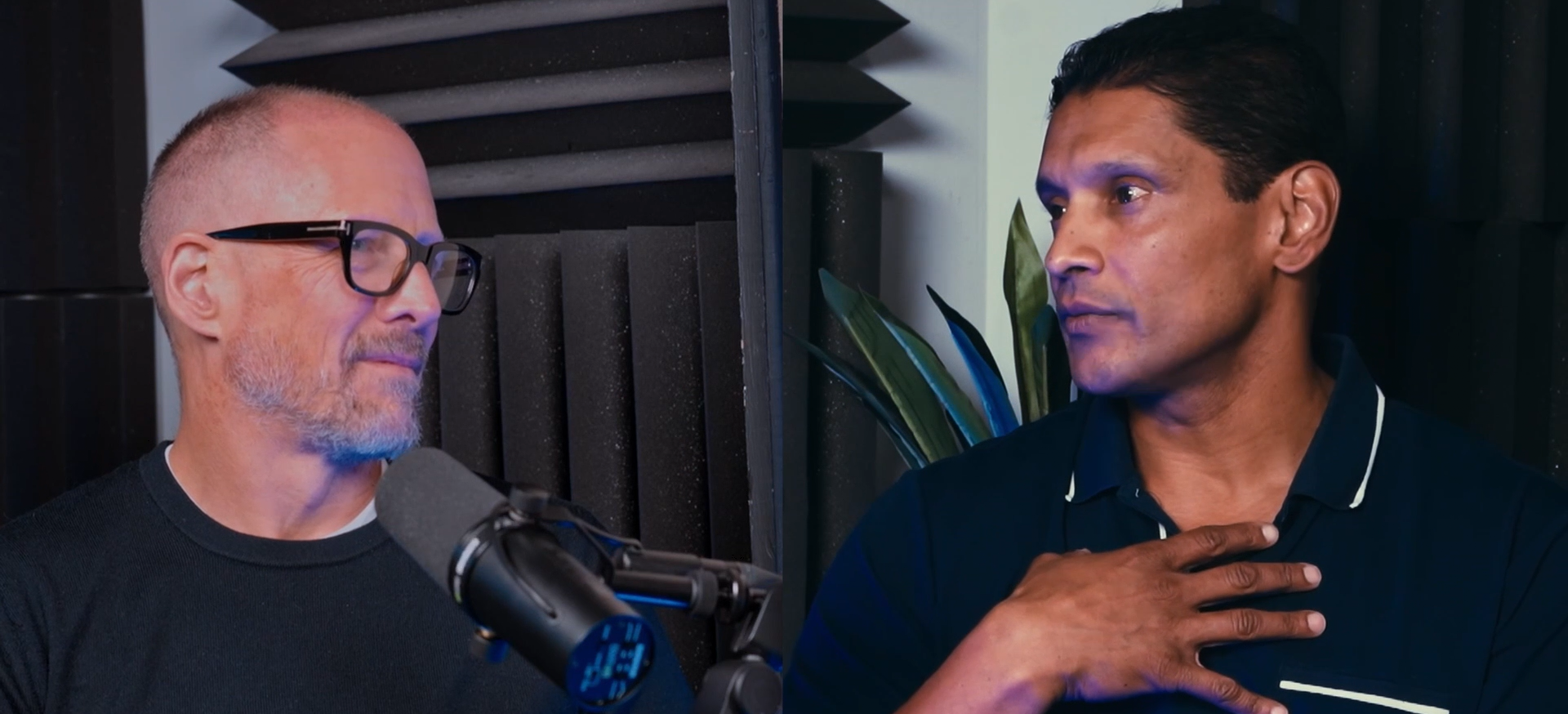




In this episode, Lucas Hendrich, CTO at Forte Group, sits down with Piyum Samaraweera, Chief Product Officer at L2L, to explore what happens when product thinking meets the plant floor.
As AI makes building software easier, the hard cognitive work is shifting toward product: deciding which problems matter and which data signals prove progress. Piyum shares how L2L connects siloed plant systems into a unified data layer, why most manufacturing dashboards never changed a decision, and what it will take to move AI from recommendations to decisions in an environment where safety and uptime are non-negotiable.
Every plant runs on two sides of the same equation.
On the floor, assets go down. When a machine on a line stops, an order ships late. In leadership, the mandate is to build goods profitably, protect margins and deliver on time.
Piyum explains why L2L treats downtime as a fact rather than a failure. The product question is how quickly the right people can be orchestrated to the right machine, and how siloed plant data can become knowledge someone can act on.
Manufacturers invested billions in technology between 2000 and the mid-2010s. Productivity did not follow.
Piyum calls it the dashboard fallacy. Much of that investment went into collecting data and displaying it as, in his words, pretty pictures. What was missing was context: the why behind the what. Generative AI changes that by combining operational data with the context of why something happened. It also meets a new user expectation. People who ask questions in natural language at home now expect to do the same at work.
A plant floor runs on purpose-built systems for manufacturing, maintenance, quality and workforce. Each one works. Each one is a silo.
Connecting them is not enough, because the edges where those systems meet are human. Rooted in lean thinking and the Gemba walk, L2L integrates where it can and connects to the people who know how the machines actually run. Even in a robotic cell that is 80% automated, a human may still perform the initial fit, and the machines still need maintenance.
Some plants have run the same machinery for 50 years, with no reason to change it. Dark factories exist, but mostly as greenfield builds.
For everyone else, the question is how to get more out of the equipment already on the floor. That constraint shapes product discovery too. You cannot put an interstitial in front of an operator, so L2L relies on implementation teams and coaches who come from manufacturing, and increasingly on forensic usage analytics.
L2L is in the recommendations phase today, with decision-making as its trajectory.
In an environment where safety is at stake, Piyum draws a clear line between deterministic decisions, which can be automated with confidence, and probabilistic ones, where he wants near-certainty first. Lucas raises the longer-term question: if AI guides more decisions, where will the next generation of veterans learn from their mistakes? Piyum's answer is to close the loop. Detect when a recommendation did not work, capture why an operator chose differently, and keep lowering the barrier to input, from pencil-whipped checklists to voice.
Capturing data is easier than ever, and that creates its own problem: data saturation and LLM pollution.
Piyum's discipline is to start with the problem, define the KPIs that would prove it solved, and work backwards to the finite set of signals that matter. New KPIs are emerging as well, with energy consumption and plant culture joining on-time delivery, quality and margin.
Asked how he explains his role, Piyum notes that the world has never been short on ideas.
His job as Chief Product Officer is to make sure everyone, from hands on keyboard to the boardroom, is climbing the same mountain, aligned with go-to-market and corporate strategy. His mental model draws on Marty Cagan, his years at Intuit, and a lesson from second grade: the scientific method. An assumption is not true until it is tested.
Stay tuned for more conversations with technology leaders bringing AI to new industries, rethinking product leadership, and turning data into measurable business outcomes on CTO2CTO.
Host: Lucas Hendrich, CTO at Forte Group
Guest: Piyum Samaraweera, Chief Product Officer at L2L
Lucas Hendrich: Welcome to the CTO to CTO podcast. I'm your host, Lucas Hendrich, CTO at Forte Group. Today we have another special episode, for a couple of reasons.
One trend on this podcast, which I think reflects a broader trend, is a shift in focus from technology to product. We've had guests who are chief product officers and chief product and technology officers. Our observation at Forte Group — and it's informing how we do everything — is that product is shifting left. As some things in technology become much easier, for obvious reasons, the hard thinking and the heavy cognitive lift may be shifting a bit more to the product side, now that we can create so much with generative AI powering much of what we build. In that spirit, I'm really happy to have Piyum Samaraweera with us, Chief Product Officer at L2L.
The other theme you'll hear in this episode, which we're also really excited about: at Forte Group, we've been doing digital engineering for over a quarter of a century, and much of that software development has been in the digital space. But there's a lot of less visible technology that powers manufacturing — the production of things in the physical world, and the building of houses and other buildings — that's a new frontier in some ways. These industries have always had technology, but they haven't always been technology-first.
So I'd like to think we're starting to cross a bridge into an area with a lot of opportunity: to remove friction, ultimately make life better, reduce the cost of some things, and improve the world. That's an idealistic take. To bring it back down to earth, Piem, let's start with what L2L does: its value proposition, and some of the exciting things you're working on.
Piyum Samaraweera: Absolutely. I'm Piyum Samaraweera, and I run product for L2L. L2L stands for "leading to lean." In manufacturing, especially in the '80s and '90s, lean was a very strong principle, and we came out of that lean space.
L2L addresses two sides of an equation. One side is the plant, which has some interesting challenges. Two of the biggest are asset downtime and recovery.
An asset is a machine — something that sits on a line. A line might have only one machine, but machines are often strung together. If a machine goes down while you're producing a good you ordered from me, we won't deliver it on time, and you can figure out where it goes from there.
The second challenge is, when it goes down, how do you orchestrate the right people to get to the machine and bring it back as fast as possible? Our goal has never been to eliminate downtime. I think that's a fallacy; for one reason or another, it's going to happen. The goal is to recover as fast as possible, and that's always been a product mantra for us as we build.
Piyum Samaraweera: The other side of the coin is plant leadership and operations. Why do they exist? To build goods profitably: they want margins, and they want to deliver orders on time. If they don't, they won't meet customer demand, and they'll face challenges, including figuring out how to lay people off, which never leads anywhere good.
So we exist to connect plant operations into a unified data layer where people can take action. "Taking action" is an overblown term in software, as you know. But we're uniquely positioned to sit on what are really silos of data and turn them into knowledge a person can act on. That knowledge lets them deliver goods on time, which leads to margins and profitability.
Lucas Hendrich: I imagine AI was embedded in your product stack before generative AI — predictive analytics, for example. Is that a fair assumption?
Piyum Samaraweera: There were aspects of machine learning. But what generative AI has done for us is help us harness the data: what happened, and the context of why it happened. As a product leader, that's been the transformational step in how we deliver value to customers, because we could always tell them what happened.
I joke with my product team: it's like opening the back page of USA Today and seeing an infographic about where people go on Caribbean holidays. I never book travel from it. An infographic is a pretty picture. Many of the dashboards and mechanisms we've had have been pretty pictures. You don't see action based on them. My feeling is that much of that is because the person didn't have the context, and software without the context couldn't give them a recommendation or a decision about what to do.
Lucas Hendrich: Absolutely. And I think user expectations are shifting from consuming a dashboard to: "I just want to ask a question and get the visual that makes the most sense to me. I don't want a standard dashboard anymore. I just want to know the correlation. Tell me what happened — what's the narrative?" Are you seeing that too?
Piyum Samaraweera: It's interesting. It's 2026, but if I go back 20 years, my users were asking that same question. We just didn't have an easy way to build it. Could we have? Yes, but it would have been really costly. What's changed is that it's now much easier.
I think part of that change is also that many of the people we talk to use consumer tools — ChatGPT, Google Gemini, even through search — in daily life. They've gotten used to natural language being how they interact: "If I can do it in my consumer tech, why can't I do it in business technology?"
Lucas Hendrich: Absolutely.
Lucas Hendrich: Tell me about data collection. I want to drill down, because I'm making a leap from the digital world, where we know the nuts and bolts of infrastructure for understanding customers and how things flow through a web application. In the physical world, you're capturing data from machines and sensors. Tell me about the architecture behind it, and how generative AI might be improving it.
Piyum Samaraweera: If you go back to the company's genesis, a lot of the data came from human interaction. Think of checklists someone has to fill out at a machine — say, during a changeover. A changeover means they were building product one and are now building product two; you have to change over because the dies may be different.
That's changing, because automation can now really help them, and it can be as simple as letting them talk to it. That doesn't work in every plant, given the nature of some plants. But data collection on the plant floor has been human, and that's largely because of lean philosophy, which was always human-centered.
Piyum Samaraweera: In lean, there's the concept of the Gemba — a Japanese term for the place where the real value is created. When you go to plants today, they still talk about the supervisor going on a Gemba walk. That means visiting the different lines, operators, and machines, observing, and having conversations.
So I think a transformation needs to happen, both in technology and in culture. Lean manufacturing is still a thing, but it's evolving as technology evolves. The Gemba walk will probably still happen, but it will be different from before.
Piyum Samaraweera: As for our platform: on a manufacturing floor, you'll find multiple pieces of what I'd call siloed technology — manufacturing, maintenance, quality, maybe workforce. Each system is purpose-built, which is good, but each is a data silo.
It's easy to say, "Just connect the data silos." The problem is that if you just combine the data, you don't get the context, or the edges where the systems connect — and those are human connections. So we integrate with those systems where we can, and we can also provide that technology ourselves. That's one of our benefits: we can provide it or integrate with it.
But we also provide a connection to the human, which I think is still where the real value is. Humans are still the people in the plant. On a line building a good, the secret sauce is still the operator. They probably still know best how the machines need to run optimally.
Lucas Hendrich: Interesting. I think the Gemba walk is a great metaphor that could be applied elsewhere.
Piyum Samaraweera: Correct.
Lucas Hendrich: This will date me, and maybe you too. Before Agile was widely adopted, everything was done waterfall-style. One thing I learned while helping teams move to Agile was the Andon cord: when something breaks, you pull the cord, the whole factory stops, and everyone swarms on that particular problem. Then we incorporated that into continuous integration and delivery of software.
The Gemba walk also makes me think about where friction exists between people. I'm here in Boston, where I was at a conference on AI and data in construction. A common theme was that you obviously want to keep things human-centered, but sometimes it's friction between humans that AI is starting to make more transparent and reveal. So it serves a dual purpose: humans are at the center, but sometimes we're the problem too.
Piyum Samaraweera: Absolutely. I come from the product side and you from the technology side, and I've always said that to build a great product, product and technology have to operate without friction.
And interesting point on Agile. I lived in the world of the 45-page spec — I get a little PTSD thinking about it. But I think we're effectively going through the same evolution on the manufacturing floor.
Piyum Samaraweera: Manufacturing is a tech-lagged space, like others you mentioned. I've been in proptech and field services, and I think those evolved faster because people realized you could do fintech in them, and venture and PE dollars started rolling in.
Today's plants know they need to innovate. The challenge is that they have million-dollar pieces of equipment they won't replace overnight. So how do you get more process gains from the technology you have? You can't rearchitect the stack. You have to figure out how the stack can work with you to take you where you want to go.
Lucas Hendrich: And another anti-pattern to avoid is bolting on technology that makes things less efficient or more cumbersome — adding data collection to a process where it isn't native, for example, which may ask operators to do more, and different, work.
Lucas Hendrich: From a product standpoint, I imagine it's harder to do things like discover how a process works. You came from a more digital background, into the physical world. Tell me about those challenges. It's not easy to pull people out of a plant into a user discovery session. How do you run that?
Piyum Samaraweera: One of the biggest things we've done, which has been really successful, concerns implementation. When we bring on a new customer — these are large enterprises — we go through implementation like most companies. The key is that people on our implementation team, and on our manufacturing solutions team, whom we call coaches, came from industry. They were manufacturing specialists, maintenance people, supervisors, and plant leaders.
So they understand the challenges. When you walk into a plant, it's chaotic, and they can cut through that. They also speak the language; the Gemba is native to them, and they're comfortable with the technology. That's really helped implementation: "From my experience, I know exactly what they're doing. I don't need to translate it or have them explain it." Then our coaches come in after implementation and live with the customer. They might even go out on site.
Piyum Samaraweera: That's great, but to your point, we need to capture what happens in the moment the product is being used, and that's challenging. You can't put an interstitial in front of operators and ask them to tell us what they're doing. They'll revolt. In fact, they revolt today if we do anything that keeps them from doing their jobs.
So it's become more forensic for us. Usage analytics have gotten much better, and we can harness that alongside our database. That's where AI has really helped: we can now combine those data sets much more easily.
Ten years ago, Lucas, I had those data sets. But as a product person, I'd have had to come to you and ask, "Can I get two hours to help me build the SQL queries?" Then I'd write hundreds of lines of SQL and try to debug them and make sure they made sense.
I actually did this the other day. A customer asked how AI is being used, so I pulled in usage analytics data, our database data, and HubSpot data, because I wanted to see what calls were coming in. I did it in ten minutes, and most of that time was me figuring out what I wanted on the page.
Lucas Hendrich: That's a story — and I don't want to spend too long on it, but I have to acknowledge it — where, with so much noise around AI and its potential to do harm, some key benefits get lost. Synthesizing data is so powerful.
Piyum Samaraweera: So powerful.
Piyum Samaraweera: It's interesting you bring that up, because I was thinking about it on the car ride over. When we talked before the session, you said it sounds like there's a lot of synergy for AI in this space. That's part of why I came.
One thing I've found on this journey is that L2L has been very forward-focused, not only from a product perspective but internally, challenging us to ask how we can use AI to do things better. Now, AI can't be the tool for everything. A technologist I work with, John Lupa, said it well: AI is a wrench looking for a problem. That's absolutely right, and that's how we think about it. It gives us the ability to do much more. Our designers are actually creating production code in a branch now.
Lucas Hendrich: It's amazing. That's the shift left.
Lucas Hendrich: I want to disambiguate something: automation, and using AI to power robots, for example. That's a factor in plants. I assume there's at least preparation for it going on. From a product standpoint, are you already addressing it, or do you see it as so far off that humans are still the machine operators?
Piyum Samaraweera: It's interesting. I was at a plant the other day that has cells, including one that's completely autonomous — robots. But it still needed that data collected, because those robots still go down and still need maintenance.
We're seeing pockets of it. Even so, in one particular cell that was probably 80% robotic, 20% still needed a human doing the initial fit, because that part hadn't been figured out yet.
So I think it's coming, but you still need that data layer. At the end of the day, the questions remain: Was the order delivered on time? Was the quality right? Were the margins correct? All of that still has to be true, and it's about the data you communicate. That's why, for us, it's a two-sided equation: plant operations, and economic value to the manufacturer.
Lucas Hendrich: And to your point about infrastructure, going to a fully automated plant would mean replacing so many pieces of machinery that work really well that the transition will take a long time.
Piyum Samaraweera: Absolutely. Some plants have been running the same machinery for 50 years.
Lucas Hendrich: With no reason to change it.
Piyum Samaraweera: No reason. So aspects will change, but it'll take a while. People talk about the dark factory, and there are dark factories out there, but many are newly built from the ground up. If you're starting from scratch, sure, think that way. But for plants that have been making the same goods for 10, 15, or 20 years, things work. It's really about driving more efficiency and profitability from the plant.
Lucas Hendrich: I'm also thinking about automation in another sense. Really, the automation L2L drives is around decision-making. Is that fair?
Piyum Samaraweera: Surfacing the data for decision-making, and providing recommendations. As you and I discussed, our trajectory is toward decision-making, and I think that's our future. We're starting to do some, but we're still really in the recommendations phase.
Lucas Hendrich: How do you see that last mile being bridged?
Piyum Samaraweera: In manufacturing, it's risky. It's risky because you can't take the plant down, and it's risky from a safety perspective: you have to be careful what you do in a plant. You could instrument the operator to see what they're doing, but you can't distract them, or something bad will happen.
So I think it will happen by finding specific workflows where we can have confidence in making the decision for them. Part of that is whether a decision is deterministic or probabilistic. If it's probabilistic, as a product leader I get a little concerned about making decisions unless I'm 99% confident, and you'll have to get me past that bar. But many things done daily are deterministic. AI will probably surface them, but we'll use deterministic methods to actually make the decision.
Lucas Hendrich: That makes sense. Applying the same thinking to building construction: a floating-point problem could cause a building to collapse if it isn't caught. That's another last mile, and I don't know how far we are from making non-deterministic approaches effectively deterministic. In current parlance, you build the harness so you're not making decisions with potentially exponentially bad repercussions over time.
Lucas Hendrich: Another thought on implementation: you have essentially a veteran workforce that learned by making mistakes over time — the most valuable commodity in the universe, the mistake — and that's what lets them help implement your software, among other things. Fast-forward: as more decisions are potentially guided by AI, how do we train people? Where's the mistake-making sandbox that creates veterans, once humans are less in the loop?
Piyum Samaraweera: The challenge, in my opinion, is this. For a lot of what happens in a plant, if we put recommendations in front of someone, after a certain number of iterations we know they're right. I'm less concerned about those. I'm more concerned about the one-offs and very transient cases. People know they should grease this part, but it's not in the standard work or the checklist; it's just what they know. That's the gap I think we face, especially in manufacturing with a lot of people.
Lucas Hendrich: Is there a counter to that too? "I'm being told to do something, but my experience tells me it's actually dangerous."
Piyum Samaraweera: Absolutely. One thing we've talked about a lot is that recommendations have to be bookended with learning. You put a recommendation in front of someone, and maybe it didn't work — the machine kept having problems, or quality was still an issue. That's something we should be able to tell without asking someone to enter the data. But if the operator, or whoever makes the change, wants to do something different, we should be talking to them: Why?
The challenge on the floor, Lucas, is time. It's costly, and there's a lot of pencil-whipping — people checking boxes without really filling things in. It's very hard for people to record data. So we're spending a lot more time figuring out how to lower the bar for getting data out of people.
We added voice this month, which I think is a good step, though I remain concerned about plants with loud work areas. But those are the kinds of steps we need to think through, because we have to lower the bar for getting data in. At the end of the day, the quality of the data and the context is what will let our AI make them more efficient.
Lucas Hendrich: I totally agree. As a way of working — and this will age quickly, because it's being adopted more every day — LLMs are powerful because of language, and the more language you feed them, the better your results.
Yet I work at an 800-person company, and most of the time, if we're not automatically transcribing a conversation, people don't intuitively capture it. Some conversations you don't want to transcribe for privacy reasons, maybe with a client. But within a company, there's really no logical reason not to capture everything said and feed it in for synthesis and automation, which makes everything downstream much faster. But I guess in a plant, it can get noisy.
Piyum Samaraweera: It's interesting, because it's a double-edged sword. We're ingesting more and more data in more and more contexts, and looking for places we haven't operated before, even though we've already had a pretty wide berth within a plant.
But it also creates a challenge we discuss as a product team. If someone has a job to be done, sure, we might have 18 data sets, but which are most relevant to that person in the moment they need them? There's a prioritization of data that we need to think through. I think everyone is thinking about this, because once you reach data saturation, the LLM will have problems.
Lucas Hendrich: LLM pollution is already a big thing. You also don't want someone to take a 30-second conversation and send you a five-page dissertation about it — another thing to read and consume. I'll just feed it to something else to figure out the signal amid all the noise.
Piyum Samaraweera: Absolutely.
Lucas Hendrich: What learnings have you brought from working in the digital space to the physical space? I feel part of it is ontological — a matter of lexicon. But what ways of working have you brought or modified, coming from digital into manufacturing?
Piyum Samaraweera: One of the biggest things is that we've done a really amazing job of listening to our customers. That's more about product foundations: how do we get leverage across the things we're building? That's more product philosophy than digital.
From a digital perspective, the biggest thing is asking whether we're collecting the right data at the right moment for the question being asked. It's so easy to capture data now, and that goes back to the pollution problem. We collect all this data, then people try to mine it, and I ask: What problem are you trying to solve? Can we start there? Then ask yourself, if you could solve it, what KPIs would you look at? Then work backward to the data sets you care about.
It's gotten much easier to process all this data. But to your point, a two-paragraph thought turns into five pages, and I want to stop reading. I'm glad Claude could produce it for you, but it's not adding value to my day.
So one of the biggest things is getting into the mindset that having AI doesn't make it OK to create more and more content. Our goal is to create value, and value has to be based on the digital signals we see. That has to be a finite set, and I want to know what that finite set says. That's been hard, because we've been focused on fixing problems. Now we have to focus on the data signals, and with AI we can translate those signals into the actual solution we want to build.
Lucas Hendrich: Absolutely. One way I think about it, common to any space where we apply technology to solve problems, is that scarcity is shifting. What's scarce now? Human attention. Also product-market fit. If you can do 100x more feature development, that's too many features for anyone to use in a day — maybe I need a hundred agents to use them. But what is that producing, and how does it actually translate into something meaningful?
The way I think about it is: How does it improve quality of life? Isn't that the end goal?
Piyum Samaraweera: Yes.
Lucas Hendrich: And then, to your point, it's a question of measurement. What's a good quality-of-life indicator? If you're manufacturing something, it feeds a process that ultimately creates something in the physical world. Maybe it's measured in lower, or less costly, power consumption, or a housing index and the cost of buying a home.
In digital healthcare, that's a huge, complicated set of problems. You can often solve a first-order problem without thinking about the whole equilibrium, and end up improving one small aspect of life without solving a downstream problem, because of differing incentives. In construction, you get into the human friction and how to sort through it.
In manufacturing, what are some of the bigger industry KPIs you're working toward from a product standpoint? Are they traditional, or are there new ones people are thinking about?
Piyum Samaraweera: Starting with new ones: I think one is nascent, but I've heard it before, including on a podcast about manufacturing AI I was listening to this morning. Energy consumption is a really interesting one, especially as we all talk about electricity prices rising with data centers and the general cost of power these days.
These factories have to run. So what's the optimal way to run them to reduce energy costs or the energy footprint? That's not something manufacturers thought about before, at least the ones I've spoken to, so I think it's a new space.
Piyum Samaraweera: Many KPIs are tried and true, mostly based on the plant level and plant performance. I think AI gives us an opportunity to elevate that: how does the plant fit into the enterprise's overall strategic goals? I think a lot of these will start to emerge.
Another example, more on the human side: I think there's been a shift over the last five to ten years, probably accelerated by COVID, where people in plants are thought of more as employees. You have to create the culture and the environment, and you're seeing more of that: family days, cookouts, barbecues, people getting together.
So there are things that will move the business, like reducing energy consumption and costs, but also things like culture, which will raise performance, because happier people probably do better work.
Lucas Hendrich: That's really interesting. As you say that — and I'm going way over my skis here, because I'm not a historian — I think about political conflict around manufacturing and factories. This is the means of production: the tension between worker and owner, as in Marxist thinking. Your software is a kind of bridge. The owner's KPIs may not be the same as the worker's. Do you see greater alignment?
Piyum Samaraweera: I think that's where we have to do a better job. At the end of the day, the manufacturer exists to make money. So how is everything happening in the plant enabling that? It's about the order: building it on time, at high quality, with the best margins. That hasn't changed, but our ability to communicate it and put it in front of people has — along with the real-time nature of the data, and the ability to change how you're structured.
Piyum Samaraweera: Something can happen at a plant that you can't plan for. I was at a plant the other day that had shut down because the town turned off the water. What do you do then? You'll have to run the shift over the weekend, and that's an expense.
So understanding all these variables matters. In the water case, maybe you couldn't plan for it, but at least you have it as a historical data point. How did you solve for it, and what were the economics? Then you can start modeling it into future business plans.
As I said at the start, downtime is going to happen. Assets will go down — that's a fact, not an opinion. Our goal is making sure they come back quickly, but even at the plant level: if water goes down, that's something we can help solve. If a plant is producing a good, is there another plant that could produce it? That's scenario planning and quick failover. This is getting more theoretical, more of a hypothesis, but I think it's about giving them scenario planning, because at the end of the day it's about whether the person buying that good is happy.
Lucas Hendrich: Thinking theoretically, do you see a bridge where the data your platform collects could help plants become more autonomous?
Piyum Samaraweera: Absolutely. I had a conversation the other day with a continuous improvement lead who wants to pull in our data. He and his team are creating new processes and new equipment for their plants, with the goal of driving efficiency and figuring out how to become more autonomous — not necessarily replacing workers. There's a shift in what workers do, and I think one of our challenges is that technology will replace some jobs, but there's a shift: you'll be doing something different, and you're still valuable.
They build it and roll it out, and then they need us to tell them whether it's working. Otherwise they'd have to go check themselves, and with 10 or 15 plants, that's not feasible.
Where it gets really interesting, for them and other customers, is combining our data with data they already have. They might have their own models of what the result should look like. Are they actually seeing the benefits on the plant floor that they saw in their test environment?
They also don't necessarily understand all the variables at each plant. Some of these are multinational, with cultural differences they may not have modeled. So that data will prompt hypotheses and questions about how they build things. I think continuous improvement will be one of the key places where we get data back, and the people in the plant are the ones who will really move them forward.
Lucas Hendrich: That's fascinating. There are so many parallels between the software factory and the plant, and it'll be interesting to watch how plants evolve over the next 10, 20, or 50 years to become more iterative. The physical world obviously has constraints from the laws of physics. But thinking through this conversation — shifting focus to power consumption, more autonomy, bringing things online when others go offline — it makes me wonder whether manufacturing is looking at a productivity boom, simply being able to produce more.
Piyum Samaraweera: That's the hope, right? What's interesting about that statement is that between 2000 and about 2010 or 2015, billions of dollars went into manufacturing technology. And if you look — not even at the plants, just at federal government data — productivity didn't go up.
I think technology investment has to be based on data. A lot of that investment went into trying to get the data, and that led to much of the dashboard fallacy we have. It's not just manufacturing; I've been in enough spaces where it holds: "I have the dashboard, so I'll run better." No, you won't, because it won't help you make the decisions you actually need to make to run your plant, or whatever you're doing, well.
But now you have the data, and I think you finally have a way to use it. Our view is that our platform helps at the plant level, but we'll also provide data that helps the entire organization. As each plant standardizes and optimizes its processes, you should see the value there. You can also take it to the corporate level and look more holistically: How do we roll out the next plant? What's the optimal way? What standard processes do we want?
Lucas Hendrich: Are the engineering problems to be solved more physical or digital?
Piyum Samaraweera: For us, they're really digital. We operate in a physical space, but we really live in the digital world. The way I see much of what we're doing: there's a workflow, and someone has a job to be done. How do we make sure we're part of that job? That's not an AI statement; we simply have to help them.
It has to be frictionless and easy, and that's even more critical in manufacturing. If you're asking an operator to do something — don't. It has to work for them. There may be occasional interaction, but in many cases we've set the bar too high for operators, asking them to provide too much data — or even people on the maintenance team. So we keep lowering that bar. If we can lower it, especially for data coming in, and do it digitally, we know the quality will be higher than if a human entered it — back to the pencil-whipping scenario I mentioned.
Lucas Hendrich: I'll change tack a bit. Part of what makes this podcast fun — and part of its origin story — is that my kids ask what I do, and I can't explain it in a sentence. It would be easy if I were a firefighter or an airline pilot. How do you explain what you do as a chief product officer?
Piyum Samaraweera: Great question. I'll answer from two sides. First, we're never short on ideas — the world has never been short on ideas. The question is which ideas are most material to where you want to go.
I think of where you want to go as climbing a mountain. I've walked into many organizations where everyone is climbing a 30,000-foot mountain, but they're all climbing different mountains, in different countries. In other words, they're misaligned. One of my key goals is that we're all climbing the same mountain, and that mountain needs to enable the go-to-market strategy and the corporate strategy.
I want everyone in my organization, if they're hands-on-keyboard, to be able to look up and see through the product strategy to the go-to-market strategy and the corporate strategy. That's one of my key goals on the product side. I'm not telling them what to build. I'm telling them which mountain. I want them heading up, base camp by base camp. I don't want anyone moving horizontally.
Piyum Samaraweera: The other piece is the people side. We have smart folks at L2L, and we can definitely build what we want. But people are the challenge. How do you get the most out of people? People want to deliver value and be productive. How do you structure the environment so they can? That's the other part of my role.
Lucas Hendrich: That's a lot for one sentence, and a big mission. One way to think about it is that the product function aligns effort with value.
Piyum Samaraweera: Correct.
Lucas Hendrich: And points out the misalignment — when someone's on the wrong mountain. That's a huge challenge, because you're also not the board or the CEO.
Piyum Samaraweera: Yes. That's where, in my seat, I have to give the product team the ability — and the safety — to say, "Wait a second, that's not where we're going," and be confident enough to say it, even to the person who hired them. Otherwise, you'll build against the strategy, or away from it.
One of the biggest things for me is having product people — and as you know, it's less about product management these days; everyone is a product person — who understand where we're going and can make sure we stay within the guardrails.
Lucas Hendrich: You mentioned lean. What principles have you learned that form your mental map? It could be an idea or a book. Where does your mental map come from?
Piyum Samaraweera: My product mental map comes from Marty Cagan.
Lucas Hendrich: OK.
Piyum Samaraweera: I was lucky enough to work with him at Carbonite a long time ago, when he came in to help build a product management team. So a lot of my DNA comes from that. I was also lucky to spend five years at Intuit. I always say, if you want to be a product manager, start at Intuit, because they build good product managers.
Lucas Hendrich: Absolutely.
Piyum Samaraweera: Philosophically, it's about how you build from the customer out — and more specifically, how you create the internal processes to do that. As I've gotten older, and maybe more cynical, I think it comes back to what you learned in second grade: the scientific method. Is something a fact and understood, or is it a hypothesis? If it's a hypothesis, what are your assumptions? Then you check those assumptions off. We're fallible because we believe assumptions are true. They're not true until you test them.
Lucas Hendrich: Absolutely. I've mentioned that part of my non-traditional journey into technology is that I majored in philosophy, and I think the Socratic method is underrated. It's a great framework for getting to the heart of something.
Piyum Samaraweera: It's funny. I think we're in the same age bracket, and a lot of what's old is new again. My technology partner just made some organizational changes, and as I look at them, I think, "This feels a lot like what we did back with Agile." The conversations are now in the center, and it's all product people. It's really interesting that we've come back to where we started this conversation.
Lucas Hendrich: Absolutely. Many of our engagements no longer start with technology the way they used to. They start with asking the five whys and value stream mapping. These concepts aren't new, but they're much more relevant now. Part of it is the new scarcity: technology is the easy part. The hard part is figuring out which problem to solve.
Piyum Samaraweera: Correct.
Lucas Hendrich: And whether it will really make an impact.
Piyum Samaraweera: Absolutely.
Lucas Hendrich: This has been a really fun conversation.
Piyum Samaraweera: Thank you. It's been a ton of fun.
Lucas Hendrich: Thank you.