

.webp)



“Working at NASA is a humbling experience because tech is like electricity.”
At NASA, technology teams existed to support the mission, not to be the focus of it. Scientists and astronauts cared about whether systems worked reliably, not what platform was built. That environment shaped a mindset where reliability and delivery mattered more than architectural elegance.
“We went live around midnight… six o’clock in the morning, Columbia crashed… the site stood there and took hundreds of millions of hits.”
A platform launch was immediately tested by a real-world crisis. The public rushed to NASA’s site for information, and the system had to scale instantly, without cloud infrastructure. It became a defining lesson in operational readiness and resilience.
“Use AI to assist, to help, not just to fully write.”
At Sonny’s, generative AI is used in the software development lifecycle, particularly for generating test cases and improving testing coverage. The team saw efficiency gains but also learned that fully AI-generated code created maintenance challenges, reinforcing the need for human oversight.
“You walk into most car washes and the point-of-sale system has probably been there for 20 years. It works.”
Legacy systems persist in operational businesses because reliability matters more than novelty. Modernization requires integrating new capabilities: customer engagement, reporting, and automation, without disrupting existing operations.
“Think about predictive maintenance… vibrations, water pressure… and computer vision so cars don’t collide.”
Modern car wash operations rely on software controlling real-world processes. Systems monitor equipment health, guide maintenance decisions, and ensure safety inside automated tunnels.
“As part of onboarding, you go to the Car Wash College: entire tunnels set up to learn how everything works.”
Understanding the physical environment is essential. Engineers working on the platform must understand machinery, operators, and workflows because the software directly interacts with real-world equipment and customers.
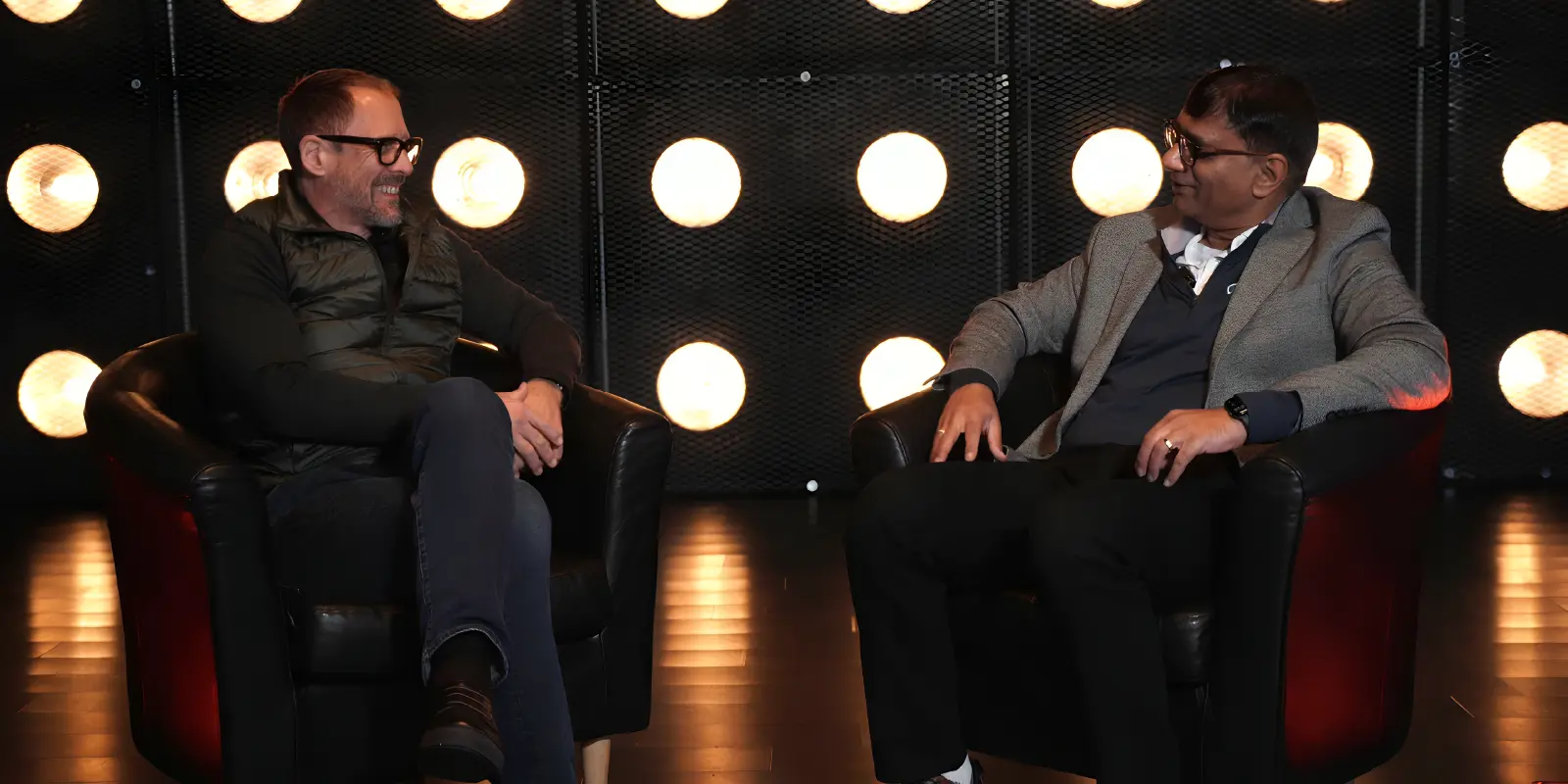
Below is the full transcript of CTO2CTO Season 2, Episode 5, featuring Eashwer Srinivasan, CTO at Sonny's Car Wash, in conversation with host Lucas Hendrich, CTO at Forte Group. Lightly edited for clarity.
Lucas Hendrich
Welcome to the CTO2CTO podcast, where chief technology officers dig into the challenges and opportunities that leaders face every day at the intersection of business and innovation. I'm your host Lucas Hendrich, CTO at Forte Group.
Today we have Eashwer Srinivasan, who is the CTO at Sonny's Car Wash. Am I saying that correctly?
Eashwer Srinivasan
Yes, yes.
Lucas Hendrich
Great to have you here today. We are here in chilly - what's for me, chilly - Fremont, California. It's funny that I'm from New York and I think this is chilly, but you really feel the humidity here.
So probably what I'm selfishly most interested in, because of what I'm reading right now and just my own passion, and many others share this, about space travel, whether you get to live it or live it vicariously through science fiction. A large part of the beginning of your career, I understand, was at NASA.
When we think about NASA these days, I think we tend to think about it as a kind of incumbent to SpaceX and therefore maybe a little less agile, to put it in a very politically correct way. So if you could share any stories from that time; maybe a project you worked on, any misconceptions I may have about NASA, what it was actually like being there, or something that really surprised you.
Eashwer Srinivasan
Thank you, Lucas, for having me. Yes, my time at NASA was fun; a lot of learnings, a lot of education along with it.
I'll give you an anecdotal reference. Coming from the Bay Area, you typically think about tech superstars, you think about tech as the thing that's going to make or break things, bring in new innovations every month. Working at NASA is a humbling experience because tech is like electricity.
What do I mean by that? It's about the science, the astronauts, the folks who look at the mission of "I want to see if a plant's going to survive in the International Space Station." It's astrobiology. When I'd tell the scientists, "Hey, we are working on this brand new technical infrastructure that's going to make your computations easy," it didn't even register. "When is it going to be ready?" Simple.
And the fact that if it was not there, you are a moron, you don't know what to do. That's the modesty you arrive at: technology is not the top thing. It's the science.
Lucas Hendrich
That was a very humbling experience. No one cares about building the platform, no one cares about the things that maybe a lot of CTOs care about right now if they're building an e-commerce site. It's a totally different focus.
Eashwer Srinivasan
Correct. There are two sets of audiences. One is the general public, people who are interested in space and science. But from within NASA, it's about: is the shuttle going to reach appropriately? Do I have the appropriate angles calculated? Do I have all the equipment necessary? Is there a battery? Is there a solar backup? That's what they're talking about.
Right around that time, I'm talking 2002, 2003, if a disaster or major news event happened at NASA, they'd typically just put up a page saying "site down for a certain amount of time." There was a public affairs number you could call in. That's about it.
What I had the opportunity to build was a true platform that would provide for the computational needs of the science, but also what citizens were looking for: the coolest images coming from the Hubble Space Telescope, the latest image from the Mars rover Spirit and Opportunity; outreach, education, understanding how certain things work in the universe. If you look at the website today, it's night and day compared to what it was before.
Lucas Hendrich
What was the North Star? What were the metrics? Were typical engagement metrics even known about, given that their focus is really the trajectory of rockets?
Eashwer Srinivasan
We actually got very lucky, lucky in the sense that the platform got proven within 24 hours of launch. And I know it's a tragedy, but it speaks to this.
It was January 31, 2003, when we went live. I still recall it was about midnight when we flipped the switch and the new platform went on board. Six o'clock in the morning, Columbia crashed on its re-entry. The site stood there, took hundreds of millions of hits, page views from people coming to figure out what was happening. Folks immediately started to realise we could actually send the word out on what is happening.
Lucas Hendrich
So scalability. And this was 2003; scaling in 2003 isn't like scaling now with Kubernetes and all kinds of automation.
Eashwer Srinivasan
No cloud existed. The infrastructure was pretty much machines, servers. The amount of page views and number of users that started to come to the site, because they could. Teachers started to use it as an educational resource, pointing kids to read up on particular pieces. That really resulted in it getting noticed.
About a year later, there was another major recognition. I don't know if they still do it, but there's an award called the Webby Award. The site was nominated in the government and law category, and it won. Suddenly people were like, "Oh my god, there's a site there that three years ago we wouldn't even have recognised, and today people are loving it."
Lucas Hendrich
Do you like science fiction?
Eashwer Srinivasan
I am an ardent Star Wars fan.
Lucas Hendrich
Tell me why.
Eashwer Srinivasan
To me, a lot of times what you see in science fiction feels like it's happening today. Think about the Tom Cruise movie Minority Report; whatever's happening there is not too far-fetched.
Lucas Hendrich
Life imitates art. I love Star Wars too; I take more from the moral universe than the physical one. Once you understand how gravity works, the Millennium Falcon kind of falls apart. So how do you reconcile that, working at NASA?
Eashwer Srinivasan
You know, in Houston at Johnson Space Center there is a replica of the International Space Station, underwater. The entire experience of zero gravity is mimicked underwater. It's called a neutral buoyancy lab. If you ever get a chance to go see it, it is something of a sight. The entire space station is constructed in a huge pool. The astronauts wear suits, and at a certain depth there's zero gravity; they do all the welding and practice in there. It's fascinating.
Lucas Hendrich
Did you have an opportunity to go in?
Eashwer Srinivasan
I was a distant spectator. They won't let me in.
Lucas Hendrich
I often tell my kids that my dream would be to go to space someday. My favourite science fiction at the moment is The Expanse; the great thing about it is it takes all the scientific principles and plays out the scenario. If you were born in the asteroid belt, you can't go to Earth because the gravity would kill you. Mars has better military. When they walk around on spaceships they have magnetic boots, which helps with that suspension of disbelief.
Eashwer Srinivasan
I've got to look that up.
Lucas Hendrich
You've worked with GE, Rockwell Automation, and Wind River, companies deeply entrenched in industrial automation. With AI and agentic architecture now pushing towards intelligent automation, where do you see Rockwell positioned? They've got a lot of competition from smaller startups. Where do you see that going in the next three to five years?
Eashwer Srinivasan
When you look at industrial automation, it was primarily Rockwell and Siemens; Rockwell dominated North America and Siemens dominated Europe. That division largely persists today.
Rockwell has amped up their investment in technology quite a bit; a lot of software innovations coming out, either organically, inorganically through acquisitions, or through partnerships.
Here's a simple scenario: when you think about industrial automation languages, people would code in ladder logic, very electrical-engineering-type programming. What Rockwell recognised was that modern engineers don't really want to do that. They want Java, Python, something their grandfather wasn't doing. So an abstraction layer was created that takes inputs from modern languages, translates them into ladder logic, and runs it through. Over time, AI was infused into that translation to make programming even easier; simpler for operations, simpler for maintenance, simpler for installation.
If something breaks in an assembly line today, you need an expert. Somebody can't just waltz in like it's their Netgear router. Making it simpler changes that equation significantly.
Lucas Hendrich
What about culturally? A startup versus Rockwell as a strategic investor - how does Rockwell compete there?
Eashwer Srinivasan
That touches on a general problem with larger companies. Smaller companies can break through without worrying too much about process. In Rockwell and similar companies, there's a more process-heavy burden.
What I've seen work is companies creating subdivisions that are allowed to function as a startup within a larger company. For a certain period you don't have to worry about CMMI or ISO processes; you let them live and breathe. Once it's in the hands of hundreds of customers and you need method to the madness, those processes come back in as technical debt. But the leadership needs to understand and realise that. It takes time to get there; that's the struggle with a lot of larger companies.
Lucas Hendrich
I've observed this in financial services too. Is the market pressure as real as in an open marketplace, or is there a kind of protective quality?
Eashwer Srinivasan
I look at it in two dimensions. From a larger company's point of view, with thousands of customers, there's "gold plating"; whatever we put out has to be of a certain level of quality, customer support, and experience because that's what our customers are used to. Anything less is unacceptable.
For a startup, there's no baseline established yet, and no brand reputation to protect. They want to ship new features fast and delight people, but does it have security? Appropriate controls? Compliance? Do you know what PCI means? Those questions aren't fully baked in. I sit on advisory panels for several startups and you're always weighing when to address those versus getting capabilities out faster. That's one of the fundamental tensions, and it exists even for startups within larger companies.
Lucas Hendrich
From a pure innovation standpoint, was it 60 percent of what you'd see in a purely open market? Were you surprised or frustrated?
Eashwer Srinivasan
It's always a wave, depending on the lifecycle. Early on, the ability to tap into subject matter experts who've done some of these things for a long time is priceless, and very hard for a startup to replicate. Want to talk to an avionics engineer, someone doing power generation, someone running renewable wind farms? Here, it was just a phone call away. The assimilation of product-market understanding is fantastic.
On the other hand, a lot of times ideas stay within the company and don't benefit from true external customer advisory. There's a general assumption that "we know the customers," but do you? A startup going out to genuinely understand customers can uncover angles that a larger company misses, and carve out a niche in a white space that the larger company decided wasn't worth investing in.
Lucas Hendrich
Now you're with Sonny's Car Wash. I've spent part of my career working with PE-backed companies where the solution is very sticky and niche, and often the software in place is very old but reliable; it's created real operational leverage, even if it isn't always the sexy solution. Tell a bit of the story of who Sonny's is and why it's fascinating; they're embedded in so much of people's daily experience and most have no idea they're interfacing with this particular company and their technology.
Eashwer Srinivasan
All of us use car washes at some point. Sonny's was established around 1949 by a gentleman called Sonny Fazio, who started the company making equipment for car washes. Today, Sonny's is a vertically integrated car wash equipment provider, software provider, and business applications provider for the industry. We don't run the car washes -we provide everything you need to run one.
There are about 15,000-plus car washes in North America alone, plus Europe and Australia. There's a fair bit of technology in each one: motor control centres, the logic needed to move machinery over your car without damaging it, the brushes and bristles, the chemistry that determines the dosage of each chemical, how much when you ask for a graphene wash versus a ceramic wash. The point of sale where you buy your wash. And all the back-end business systems an operator needs; how's my wash doing, what campaigns can I send out from a CRM standpoint. All in a single envelope.
When you think about innovation in any of these areas and the opportunity for technology to make a difference; walk into most car washes and the point-of-sale system has probably been there for 20 years. The buttons don't work. There's no real interface into it. It works, but today people like the Chick-fil-A model: someone says "can I help you?", here's an app with loyalty and membership. Those point-of-sale systems are relatively legacy.
Then there's what's inside the tunnel itself. Are you heating up too heavily? Are your machines vibrating too hard? Is there a lack of pressure in the water line? Standard IoT use cases. Predictive maintenance: the vibration on this motor is going high, you need to do something about it. The amount of chemical being dispensed is lower than it needs to be - your valve needs changing. And some tunnels can have multiple cars inside at once - computer vision to make sure cars don't collide if someone slams the brakes. Those are systems we build.
Lucas Hendrich
Interesting. From a consumer standpoint - and I know this is mostly B2B, when I go to an automated car wash there are usually three or four people around. Is extending to the direct consumer experience anywhere on the roadmap?
Eashwer Srinivasan
I see the pendulum swinging multiple directions on that. As I've learned more about the industry, many operators actually believe that if they went fully automated, their membership and retention would suffer. They feel the human connection - greeting customers, making things fun for kids - is what makes people come back. Even operators who went fully automated are swinging back to say they need a couple of people there to greet customers and make sure they've got what they need. The customer service aspect has significant value in member retention.
Lucas Hendrich
There's a trust aspect too, especially for high-end car owners.
Eashwer Srinivasan
Right. "I go to that car wash, Charlie takes care of it for me." Whether Charlie is really doing it or not is secondary. The fact that Charlie is there matters. So it's more about making sure Charlie is armed with the best technology to provide the best experience than it is to eliminate Charlie.
In Europe there's a lot more fully automated, but those tend to be smaller, gas-station-style washes. The larger tunnel washes like to have customer service.
Lucas Hendrich
There's a platform you launched in 2024 - Quivio. What does that mean?
Eashwer Srinivasan
Yes, Quivio. Launched November 3rd and 4th. The word comes from a quiver of arrows, that's the genesis of it. The intent is a single, overall platform that provides all the software and business applications an operator needs to run and manage a car wash - with offline capability.
The typical modules include: POS - how you run it, the reports, what kind of churn, membership, and sales you've done. CRM to engage with customers. Custom branded applications that go on phones and tablets for consumers to interact with. Workforce management. P&L management: how much water, electricity, and everything used. Maintenance management. And security and indemnity management; if someone says "you chipped my windshield," you pull up the AI-based video review to establish what happened, whether to escalate to insurance or to say we didn't do this.
Lucas Hendrich
I wonder if car washes will start advertising that they use that platform, so consumers know if they have an issue it will be easier to resolve.
Eashwer Srinivasan
"Protected by Quivio." That's a good idea; we should probably mention that to our marketing team.
Lucas Hendrich
I'm assuming you have a very diverse tech stack; embedded systems, customer experience, different layers of abstraction. How are you using generative AI in the software development lifecycle, given the complexities of working across that entire vertical? And how are you ensuring you have future talent in an environment where the expectation is often not to hire juniors and train them?
Eashwer Srinivasan
That's a big question, but it's something we ponder quite rigorously. One key principle: AI-based coding assistance is assistance, not replacement. That's an important distinction.
We're using AI in at least three distinct areas. First, around quality - using tools that automatically create test cases, functional cases, and regression cases as coding happens. The whole concept of handing it off to a QA automation engineer to write test cases is becoming a thing of the past. These automatically generated test cases still go through a human eye to catch hallucinations and ensure the basic functional flow is right, but we've seen roughly 30 percent efficiency gains on effort.
Second, on the testing side, making sure you know what to test more. Depending on your code repository, you can identify which areas are getting the most customer transactions - those are the ones you absolutely have to test. That helps prioritise the long tail.
Third, we've started using AI while coding on newer projects. There was a lot of enthusiasm around it, but it took only about a couple of sprints before the leads came back and said we've got to change the process - nobody knows how to fix something when something goes wrong. The code that these systems generate can be pretty complicated. For a simple bubble sort the algorithm might take you a while to understand what was written.
Lucas Hendrich
It's hyper verbose. And there are also things being generated that don't actually do anything.
Eashwer Srinivasan
One hundred percent. After spending several hours looking at it, you realise it's just wood filler. So we ended up putting a human review layer in there rather than using the code directly. That was a learning experience.
I'm also wary of providing our codebase to public LLMs carte blanche. We have enterprise GPTs to help with that in some cases. Our customers are also not interested in their data going into public models - for example, if they want an AI to determine what kind of campaign would have the highest efficacy, that has to run on top of customer data. They're very clear: "That's got to stay under your lock and key."
Lucas Hendrich
Is there a big lab somewhere with car wash tunnels where things are being tested?
Eashwer Srinivasan
As part of your onboarding at Sonny's, you go into a pretty large facility called the Car Wash College. It's a true college where entire tunnels are in play -every piece of equipment, the interactions, how it works, how you configure it. I had no idea how much goes into a tunnel for something that takes my car three minutes. Car Wash College was mind-blowing.
Everything is deconstructed: the brush, the pivot, all of it. You can work with it to understand how it gets put together. Many operators, when they put in new car washes, come here to get trained on how to run the equipment. People come from worldwide; it's a very busy college.
Lucas Hendrich
Is AI integrated into it now?
Eashwer Srinivasan
Not today, but it will be. Can we use digital twins? Can we use VR/AR technologies in there? That's a thought process we're exploring.
Lucas Hendrich
This has been a great conversation - it really reminds me of how much invisible complexity sits behind things we take for granted. Last question: do you want to go to space? Would you go if you had the opportunity?
Eashwer Srinivasan
I would. I recall seeing that Jeff Bezos rocket with a bunch of industrialists going up there and thinking, "That'd be cool." But I'm pretty sure I can't afford it right now.
Lucas Hendrich
The cost will come down, if it's anything like commercial air travel. It took about a century for air travel to become accessible to pretty much anyone. If things improve at that rate, hopefully we'll make it.
Eashwer Srinivasan
We'll absolutely get there.
Lucas Hendrich
Thanks for joining - this has been a pleasure.
Eashwer Srinivasan
Thank you so much for having me.
Lucas Hendrich
This was it for this episode. Join us next time for more real-world conversations between technology leaders. If you like what you heard, subscribe to CTO2CTO. See you soon.
Stay tuned for more conversations with technology leaders on CTO2CTO. If you enjoyed this episode, subscribe on Spotify, Apple Podcasts, and/or YouTube.